
 Caleb Turner

For maximum performance, I recommend selecting a club with a range of 54 to 58 degrees of incline. This angle strikes a balance between height and distance, allowing for effective approach shots and delicate chips around the greens.
When I assess my equipment, I prioritize how the specified angle affects my shot trajectory and spin control. Higher degrees, such as 58, provide more loft, yielding greater height and stopping power on greens, while a 54-degree option offers reduced spin and longer distance. Consider your playing style and typical shot scenario to determine which specific incline aligns best with your needs.
It’s also worth noting that personal comfort and familiarity play significant roles in performance. Experimenting with different inclines can help you find the perfect fit. Don’t hesitate to test clubs at a local golf shop or driving range to gain real-time feedback on how the different angles impact your short game strategies.
Recommended Angle for Your Short Game Tool
For optimal performance within bunkers and around greens, an angle of 54 to 58 degrees is advisable. This range allows for enough ascent on the ball, promoting high trajectories and soft landings. It enhances the ability to execute delicate chips and challenging shots from the sand.
Factors Influencing the Choice
The ideal angle often depends on personal playing style, swing speed, and course conditions. A golfer with a faster swing may prefer a tool with a slightly lower angle, while those with slower tempos might benefit from a steeper design for added height and control. Experimenting with different options can fine-tune your performance.
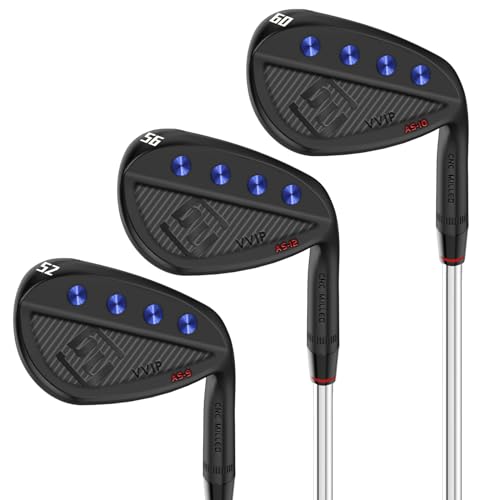


Consider Your Set Composition
Reviewing the complete set of clubs can provide insight into the angle selection. If I already possess a pitching tool with a 46 to 48-degree angle, a 54 or 56-degree model will offer the necessary gap for versatile play. Matching your equipment effectively can lead to improved scoring opportunities.
Understanding Sand Wedge Loft Basics
For optimal performance from my approach club, I prefer a clubface angle around 54 to 58 degrees. This range allows me to execute delicate shots from bunkers and around the greens effectively.
It’s important to know how the bounce angle interacts with the clubface angle. A bounce of 10 to 14 degrees is ideal for various turf conditions, allowing me to glide through sand without digging in too much.
When considering a new club, I assess the design and how it complements my swing style. A heavier clubhead provides more stability during impact, particularly beneficial for precise shots.
Additionally, the versatility of the club is crucial. My choice often depends on the course layout and specific green conditions. Knowing how to adjust my approach based on these factors helps me achieve better results on the course.
Lastly, I also find that personal comfort with the club’s grip and weight distribution significantly influences my performance. Tailoring my selection to fit my technique leads to greater confidence during play.
Recommended Range for Different Skill Levels
For beginners, a range between 54° to 56° is ideal. This angle allows for better control and higher shots, making it easier to get out of bunkers.
Intermediate players might benefit from a 56° to 58° range. This selection provides a balance between versatility and spin, catering to a variety of short-game scenarios.
Advanced players often lean towards a loft of 58° to 60°. This setup offers precision for delicate shots and enhanced greenside performance, allowing for creative shot-making.
The choice varies based on personal preference and specific playing style. Experimenting with different angles can help identify what works best for individual needs.
How Loft Affects Shot Trajectory and Control
Selecting the right angle for your club significantly influences how the ball behaves once struck. For short approach shots and greenside chips, a higher angle allows for a steeper ascent and descent, ensuring a softer landing. This quality is vital for short distances, particularly when needing to stop the ball quickly on the putting surface.
Ball Flight Characteristics
- Higher angles produce a higher launch, resulting in a shorter roll after landing.
- Lower angles yield a flatter trajectory, promoting longer rolls.
- Ideal angles support more consistent and predictable ball flights.
When I analyze my shots, I notice that a steeper descent leads to better stopping power, which can be critical in tight situations near the hole. Understanding how the angle directly correlates with trajectory helps me fine-tune my approach based on the course layout and conditions.
Control and Spin
The angle also impacts the amount of spin imparted to the golf ball. A higher angle tends to enhance spin, which is advantageous for delicate shots around the green, allowing for greater control. Conversely, a lower angle may reduce spin, promoting a more stable roll but limiting the ability to “hold” the green.
In practice, I’ve found that adjusting my technique based on the angle not only improves my control but also enhances my confidence in executing tricky shots. Combined with my understanding of other factors like grip and stance, the right angle offers the ability to tackle various challenges on the course.
Choosing Loft Based on Course Conditions
For those playing on soft greens or in wet conditions, I recommend a higher angle, typically around 56 to 58 degrees. This encourages the club to dig into the turf less, allowing for smoother contact and better stop on the greens. Conversely, if the course is firm, opting for a lower angle, such as 54 degrees, provides a lower trajectory, helping the ball to roll out more after landing.
Adjusting for Wind
In windy conditions, a lower degree can be beneficial. I often switch to a 52-degree option to keep the ball from ballooning, ensuring accuracy in flight and landing. A lower angle tends to penetrate through the wind, reducing the overall impact of gusts.
Terrain Variability
On courses with thick rough, a higher angle helps with getting under the ball to lift it cleanly out. I find that using a 56 to 60-degree option works well in these situations. If the terrain is more sparse or hard-packed, transitioning to a flatter club can enhance distance while maintaining control.
Ultimately, understanding the course conditions enables strategic club selection, aligning with specific playing styles and preferences.
Comparing Sand Wedge Lofts Across Brands
For optimal performance, I focus on the specifics of different manufacturers. Typically, the angle of incline varies from 54° to 58°, but nuances exist among brands. It’s essential to recognize how each company’s approach influences playability and wedge design.
Below is a comparison table highlighting the standard incline angles offered by several popular brands:
| Brand | Standard Incline Angle | Additional Options |
|---|---|---|
| Callaway | 54°, 56°, 58° | Additional Bounce Options |
| Titleist | 54°, 56°, 58°, 60° | Customized Grinds |
| Cobra | 54°, 56° | Unique Design Features |
| Mizuno | 54°, 56°, 58° | Multiple Finishes Available |
| Ping | 56°, 58° | Custom Fit Options |
It’s crucial to select a model that aligns with personal swing characteristics. For instance, a higher angle typically enhances shot height, while a lower angle might provide better control on tighter lies.
Trying various options from different brands can significantly impact performance on the course. Therefore, I prioritize testing to identify which incline complements my skills and enhances my short game efficiency.
Adjusting Your Sand Wedge Loft for Personal Preference
For optimal performance, I typically recommend a loft angle between 54 and 58 degrees. This range allows for versatility in various lies and shot styles. It’s crucial to assess how the angle affects trajectory and spin, which can be fine-tuned to match my individual swing dynamics.
Whenever I feel inconsistencies in my short game, I explore adjustments. Slightly increasing or decreasing the angle can enhance my ability to open the clubface or play tighter draws. I often experiment on the course to determine how a specific angle impacts my comfort and control, especially when facing challenging bunker shots.
Personal preference is vital. If I favor a lower trajectory with more roll out, I might lean towards a lower angle. Conversely, when needing more height for soft landings, a higher angle is beneficial. Keeping a consistent feel while adapting to different surfaces helps me maintain confidence in my short game.
In various situations, I find altering the angle can influence my recovery shots significantly. Whether it’s adjusting for wet conditions or tight lies, I ensure the club suits the shot required. Regular practice with different angles helps solidify my understanding of how these changes affect my performance.
It’s also helpful to consult with a club fitter to assess how adjustments would correspond with my overall setup. A custom fit can often lead to better results in my approach, making it easier to refine my techniques based on personal style and playing conditions.
When to Consider Purchasing a New Sand Club
Evaluate your current gear if you’ve noticed inconsistencies in your short game. If you frequently struggle with bunker shots or approach play around the greens, a new club might offer improved performance.
Consider the following criteria:
- Wear and Tear: Inspect for grooves that are worn down. If they are less defined, it affects spin control.
- Change in Skill Level: Upgrading to a more suitable model tailored for your current ability can enhance shot accuracy.
- Variety of Bounces: If you often face various lies in bunkers or thick grass, a different bounce profile may yield better results.
- Feedback from Playing Partners: If you receive suggestions about your current club’s performance, it might be worth testing alternatives.
Track your performance consistency. If I find myself making significant errors often, it may indicate my current equipment isn’t meeting my needs. Each round could necessitate thoughtful reviews of how well my tools work.
Stay informed about new technologies or designs that claim to enhance control or versatility. Trying out demo models at a local shop is a practical approach, allowing me to assess feel and performance before making a purchase.
Ultimately, investing in new equipment can lead to greater confidence and improved results on the course. If I feel that my current tool isn’t aligning with my gameplay, taking the step to explore new options can provide that extra edge.
Common Myths About Sand Wedge Loft Debunked
Many believe that a higher angle automatically leads to better performance in short games. This isn’t always the case; the right angle depends on player skill and playing style. A flatter angle may provide more versatility in certain situations, especially for those who know how to manipulate clubface position.
Myth: All Players Need A High Lofted Club
This misconception suggests every amateur requires a high lofted club to gain consistency in their game. In reality, players with advanced skills often prefer lower angles for more control and precision. It’s important to assess individual strengths rather than adhere to blanket recommendations.
Myth: A Traditional Angle Is Best for Bunkers
While many swear by traditional lofts for bunker shots, some players benefit from experimenting with flatter angles. A personal preference combined with practice can lead to superior performance, even in sandy situations. It’s essential to try different clubs to find what works best for your unique technique.
Additionally, customization options exist that allow for adjustments, aligning equipment to personal style rather than sticking to common norms. I encourage testing various options to enhance shot quality and overall comfort on the course.


