Caleb Turner

When I step onto the course and need to execute a precise shot with an elevation, grabbing a club with a steep angle is my go-to option. This specialized club excels in generating high trajectories, allowing me to clear obstacles like bunkers or trees with ease.
For those tricky approach shots around the greens, this piece of equipment enables me to land the ball softly, reducing the chances of overshooting my target. I find it particularly helpful in situations where finesse and control are crucial, especially when aiming for tight pin placements.
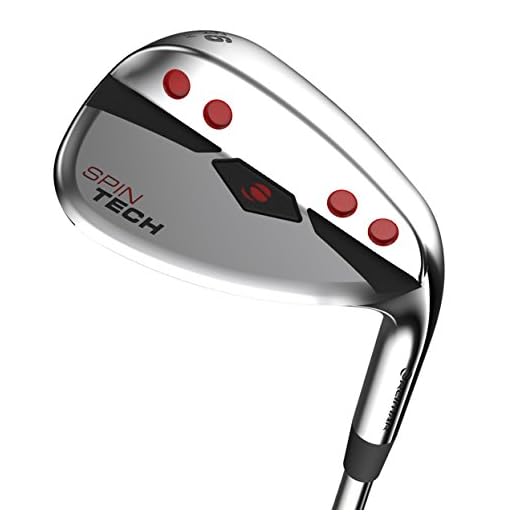

Practicing with this club has greatly improved my short game. I recommend focusing on varying my swing speeds and angles to master the art of approaching the hole from different distances. Experimenting with different turf conditions can also enhance my adaptability and precision.
Application of a High-Angle Club
This club is perfect for short shots requiring high precision, especially when approaching the green from a tight lie or around obstacles. The increased angle enables the ball to rise quickly, landing softly on the green. For chip shots, I find it invaluable, as its design helps clear the rough and deliver the ball with finesse.
Perfecting Short Game
Utilizing this equipment allows me to execute delicate shots from bunkers or tricky spots around the green. The unique design promotes spin, helping to control distance and trajectory effectively. I often rely on it for specialized flop shots, enabling me to lift the ball over hazards with minimal roll after landing.
Practice For Enhanced Control
Incorporating this tool into training routines sharpens my accuracy significantly. I recommend practicing various lies and distances to adapt to the club’s characteristics. Employing it during practice rounds builds confidence, especially under pressure during actual play, where precision is paramount.
Understanding Specifications
Selecting the right angle is paramount. I opt for a club with a higher face angle, usually falling between 54° to 60°, allowing for sharper shots around the greens. The bounce angle, which ranges from 8° to 12°, influences how the club interacts with the turf. Choosing the right bounce can significantly affect performance on different course conditions.
Materials and Design
The choice of material affects both feel and shot versatility. Forged clubs provide a softer touch, while cast designs offer durability. The finish, whether chrome or matte, can also impact glare and aesthetics.
Weight and Grip
Weight distribution is crucial for balance. A heavier club can provide more control, while a lighter option enables quicker swings. I pay attention to grip size–for a secure hold, the right size enhances feel and prevents slippage during crucial shots.
Understanding these specifications helps tailor my short game, improving precision and control in critical situations.
Situations Requiring a Loft Wedge in Golf
In scenarios demanding precise short game execution, a specific club shines. Whether in sand, heavy rough, or on sloped greens, this tool becomes paramount. Here are key situations where its application makes a significant difference.
| Situation | Description |
|---|---|
| Flop Shots | When facing tight lies or needing to lift the ball quickly, this club allows for the high launch needed to clear obstacles. |
| Sandy Escapes | In bunkers, the design helps achieve the necessary height and spin to get the ball out smoothly onto the green. |
| Chip Shots Around the Green | For delicate chips where precision is crucial, this instrument provides the control to execute various trajectories effectively. |
| Uphill Lies | On inclines, it aids in producing the needed height to navigate the slope while maintaining accuracy towards the target. |
| Short Approach Shots | From distances requiring a soft touch, it ensures the ball lands softly, minimizes roll, and holds the green well. |
Mastering these situations enhances the overall performance, making it a valuable ally in my golf arsenal.
Techniques for Utilizing a Loft Wedge
To maximize the performance of this club, I focus on three key techniques: open face shots, delicate chipping, and high flop shots. Each technique plays a vital role in navigating tricky scenarios on the course.
Open Face Shots
For tighter lies or elevation changes, I often open the face slightly. This adjustment increases the angle of the club, helping to produce a softer landing on the green. I position the ball toward my front foot and align my body left of the target line to maintain balance and control during the swing.
Delicate Chipping
When faced with short chips, I employ a more precise stance. I keep my weight forward, with minimal wrist movement, ensuring a smooth, controlled swing. Tapping into the club’s high bounce allows me to glide over the turf, reducing the risk of sticking the club into the ground.
Practicing these techniques builds confidence and adaptability while approaching various challenges on the green. I realize that mastering these skills enhances my overall performance and enjoyment of the game.
Benefits of Incorporating a Loft Wedge in Your Bag
Adding this club to my set provides distinct advantages that can enhance my short game precision. Here are some key benefits I’ve discovered:
Enhanced Control Around the Green
This club excels in delivering pinpoint accuracy when approaching the pin. Its design allows for precise shots, enabling me to place the ball exactly where I want it on the green.
- Perfect for delicate chips and delicate flops.
- Helps in navigating greens with subtle breaks.
- Enables a controlled first bounce to reduce roll-out distance.
Versatility in Different Lies
This particular club performs well from a variety of turf conditions, whether it’s rough, fairway, or sand. It adapts effectively to multiple situations:
- Great option for tricky flops or tight lies.
- Useful for recovering from challenging positions on the course.
- Facilitates the execution of creative shot-making with ease.
Having this club on hand allows me to tackle various challenges confidently and improve scoring probabilities around the greens. By including it in my bag, I can enhance my overall performance significantly.
How Angle Influences Shot Trajectory
The angle determines how high and how far my ball travels. A steeper angle causes the ball to ascend quickly, resulting in a higher trajectory. This is particularly beneficial when I need to navigate around obstacles or land softly on the green.
Effects on Ball Flight
- A higher angle increases the launch height, making it easier to clear hazards.
- Lower angles create a flatter trajectory, allowing for more roll upon landing, which is useful on firm surfaces.
- Variations in angle influence spin rates, affecting how the ball behaves upon landing.
Practical Applications
- Utilizing a higher angle is ideal for shorter approach shots where precision and soft landings are critical.
- In longer distances, a lower angle can help maintain speed and reach the target using the ground for support.
Recognizing how different angles impact flight helps me select the right club and approach each situation better. Understanding these principles directly affects my performance on the course.
Choosing the Right Loft Wedge for Your Game
Selecting an appropriate club with specific angle adjustments can significantly enhance how I handle short game situations. I focus on a few key factors: my playing style, typical course conditions, and personal comfort level with different swing techniques.
First, assessing the degree of elevation in the clubface is fundamental. I prefer clubs ranging from 58 to 64 degrees for those delicate approaches around the green. The higher angle helps me achieve greater height with shorter distances, ideal for challenging pin placements.
Next, I evaluate the bounce feature. Depending on my usual playing surfaces–soft, wet grass or firm, dry turf–I might lean towards a higher or lower bounce angle. A wider bounce aids in staying above lush grass, while a thinner sole can cut through tightly mowed fairways.
Weight and grip also play significant roles in my choice. I’ve found that a heavier club provides more control, especially in windier conditions. Meanwhile, the grip must feel comfortable in my hands to ensure smooth execution during critical moments.
Lastly, I invest time in experimenting with various models at local shops or during practice sessions. This hands-on approach allows me to identify clubs that resonate with my swing style, confirming my choices based on feel and performance.