Caleb Turner
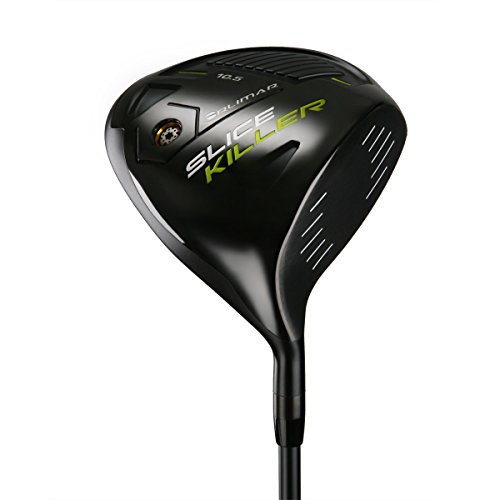
If you’re struggling with a persistent curve in your shots, adjusting the angle of your clubface might be the answer. A club with a greater angle can help elevate the ball more and promote a higher launch, which often counters rightward movement for right-handed golfers. This shift in trajectory can facilitate a more controlled flight path, making it less likely for the ball to veer off course.
Conversely, opting for a club designed with a reduced angle can contribute to a flatter trajectory. While this approach can also assist in straightening out your shots, it requires precise technique and a strong swing plane. Many players with slicing issues may find it more beneficial to address their technique initially rather than relying solely on equipment adjustments.
Ultimately, experimenting with different clubs can help pinpoint what works best for your individual swing dynamics. Whether you lean towards a club with an increased or decreased angle, observing how these changes affect your game will provide valuable insights. Always consider pairing equipment adjustments with fundamental swing corrections for optimal results.
Is Higher or Lower Angle Preferable to Remedy a Fade?
In my experience, using an increased angle helps correct a fade better than an angle that’s more reduced. A more elevated angle encourages a higher launch and promotes a more desirable ball path, counteracting the typical left-to-right (for right-handed players) movement associated with a fade.
Understanding the Impact on Trajectory
When selecting a club with an increased angle, the ball’s trajectory becomes more optimal. The added height results in a steeper launch, which aids in reducing lateral spin. This can significantly assist in straightening out the trajectory and achieving a straighter shot.


Choosing the Right Equipment
Select clubs with an increased angle tailored to your swing style. Experimenting with different angles while practicing can be beneficial, as not all players respond the same way. An equipment specialist can offer valuable insights and help you find the right setup to enhance your performance on the course.
Understanding the Mechanics of a Slice
The primary cause of a pronounced fade in a golf shot lies in the clubface angle at impact and the swing path. A clubface that’s open relative to the target line often leads to rightward curvature for right-handed players. This misalignment results in energy dispersal that produces a spin inconsistency, sending the ball off-course.
To overcome this, I recommend focusing on grip adjustments and stance alignment. Shifting to a stronger grip position can encourage a more closed clubface at impact, thereby minimizing lateral spin. Additionally, ensuring that my swing path approaches from the inside promotes a more direct strike through the ball, helping to diminish undesirable curvature.
Another effective approach is to analyze my setup. A more athletic stance, with weight distributed evenly throughout my feet, can enhance balance during the swing. This stability aids in maintaining a consistent swing plane, reducing the tendency to swing outside-in, which exacerbates the problem.
Finally, practice drills that emphasize swing path awareness become invaluable. Utilizing alignment rods or practicing swings against a wall can reinforce the correct path and clubface position, enabling me to develop muscle memory that combats this common issue.
How Loft Affects Ball Flight and Spin
Choosing the right angle of the clubface influences trajectory and spin, which are crucial for achieving the desired shot shape. A steeper angle generally produces a higher launch and increased backspin, while a lower angle leads to a more penetrating flight with reduced spin. If you’re struggling with unwanted ball paths, adjusting this aspect can lead to significant changes.
Impact of Angle on Trajectory
When the clubface is tilted more upwards, the ball tends to ascend rapidly after being struck. This is advantageous for maximizing distance and holding greens but can also exaggerate a fade if not paired with appropriate swing mechanics. Conversely, a flatter face at impact promotes a lower flight, which can help in achieving straighter trajectories through less aerodynamic lift. Paying attention to how the club’s angle affects various shots will help refine your approach.
Spin Dynamics
Understanding spin is critical for control. Increased backspin creates a lifted effect that can accentuate a fading path, while a more forward-leaning angle decreases spin and flattens the ball’s descent, often leading to straighter ball flight. Keeping the interplay between the angle of the clubface and swing path in mind allows for better management of spin rates. In practice, experimenting with these adjustments during practice sessions will provide immediate feedback and improvement.
| Club Angle | Trajectory | Spin Characteristics |
|---|---|---|
| Increased Angle | Higher Launch | More Backspin |
| Decreased Angle | Lower Launch | Reduced Spin |
Assessing these factors will help tailor your equipment and technique to produce desirable outcomes on the course. Regular revisions based on your performance will also enhance consistency and overall enjoyment of the game.
Choosing the Right Loft for Your Swing Speed
To enhance performance, I focus on selecting the appropriate angle of the clubface based on my swing speed. The interaction between my swing speed and the angle significantly impacts ball trajectory and distance. Generally, players with slower swing speeds (below 85 mph) may benefit from a larger angle to promote a more effective ascent and maximize launch conditions. On the other hand, those with faster swing speeds (above 95 mph) often find that a smaller angle helps maintain control and encourages a penetrating ball flight.
Recommendations Based on Speed
For swing speeds below 85 mph, I advise using a club with an angle ranging from 10.5° to 12°. This range encourages the ball to climb higher, allowing for a better opportunity to carry distance while avoiding excessive spin. For swing speeds between 85 and 95 mph, an angle around 10.5° is typically ideal–balancing height and distance without sacrificing control.
In cases of swing speeds exceeding 95 mph, I often opt for an angle between 8.5° to 10°. This configuration promotes a flatter trajectory, optimizing distance and ensuring a more stable flight path. Players at this level tend to generate enough speed to launch the ball effectively without needing an exaggerated angle.
Fine-Tuning for Individual Needs
Beyond these general guidelines, I continually test and adjust based on my specific swing dynamics. Factors such as personal comfort with the equipment and typical playing conditions should be considered. By experimenting with different angles in practice, I tailor my selection to find the most effective setup for my game.
Ultimately, understanding how the angle influences my swing speed allows me to make informed choices that can lead to improved ball flight and overall performance on the course.
Comparing Higher Loft vs. Lower Loft Golf Clubs
I recommend considering a club with increased angle for those struggling with a rightward shot pattern. This design yields a higher trajectory, promoting more significant elevation and reducing the chances of side spin that leads to undesirable lateral movement.
When assessing clubs with varying angles, I’ve observed distinct benefits in their performance during practice. Here are some key differences:
- Trajectory: Clubs with a steeper angle provide an ascending trajectory, helping to combat any unintended slicing.
- Launch Angle: An enhanced angle generally increases launch angle, which can assist in creating a straighter ball path.
- Spin Rate: Greater angle often results in more backspin, stabilizing the shot and minimizing sideways motion.
Conversely, designs with a flatter angle can lead to a more penetrating ball flight, but may exacerbate rightward tendencies if not properly managed. If you’re considering a club with less angle, ensure that your grip and swing path do not contribute to unwanted side spin.
Ultimately, the choice between increased and reduced angle depends on individual swing characteristics. I suggest testing both types at a local golf store or using simulator technology to analyze performance before making a purchase.
Adjusting Your Setup to Accommodate Loft Changes
To optimize your stance with alterations in the club’s angle, ensure your feet are shoulder-width apart for stability. This position allows for a balanced swing that aligns closely with your goals.
Next, position the ball slightly forward in your stance. This adjustment promotes an upward strike on the ball, enhancing launch conditions and increasing overall height.
Incorporate a slight tilt of your shoulders away from the target. This setup facilitates a more natural path through the ball, encouraging a consistent strike and decreasing the chances of common mis-hits.
Focus on your grip pressure; maintain a relaxed hold on the club to foster a smooth swing. Excessive tension can lead to erratic contacts and compromise your shots.
Lastly, practice with varied club angles at the range to see firsthand how adjustments impact ball flight. Experimenting will reveal what works best for your unique swing style, allowing for real-time feedback and fine-tuning of your approach.
The Role of Face Angle in Relation to Loft
The orientation of the clubface at impact plays a critical role in the direction and flight of the ball. A square clubface typically produces a straight shot, while an open or closed face can contribute to hooks and fades. Adjusting the face angle, in conjunction with the degree of incline, can significantly influence how the ball reacts post-impact.
Understanding Face Angle Dynamics
I find that balancing the face angle with the incline characteristics of the club provides the best chance for success. An open face can exacerbate a tendency to curve right for right-handed golfers, especially if the launch angle is steep. Conversely, a closed face may lead to a pull or hook if the ball is struck with excessive loft. Therefore, my approach includes ensuring that the clubface is properly aligned at setup and impact.
Practical Adjustments for Better Alignment
To enhance performance, it’s wise to practice adjusting the stance and grip. A square grip while maintaining a neutral face angle encourages straighter shots, allowing for a more controlled trajectory. I often recommend experimenting on the range with minor tweaks to grip pressure and club alignment. Focus on hitting shots with varying face angles to see how they influence ball flight, and find a setup that promotes consistency.
Incorporating these adjustments can lead to measurable improvements in accuracy and distance, tailoring my approach based on individual swing patterns and preferences.
Testing Different Loft Options on the Range
I recommend experimenting with varying degrees of clubface angle on the range to discover what works best for your swing. Begin by selecting a few clubs that have different face angles and take note of the launch conditions for each. Use a launch monitor, if available, to track metrics such as ball height, distance, and spin rates. This data is invaluable in determining how changes affect your ball flight.
Analyzing Ball Flight
As I test each club, I focus on the trajectory of the ball. If I notice that certain angles lead to a more desirable trajectory, it suggests that those specifications complement my swing mechanics effectively. Pay close attention to any changes in distance and accuracy as you test each option, as these will inform your final choice.
Feedback and Adjustments
After a session, I take time to analyze my performance with each club. If certain angles consistently produce straighter shots, I’ll make those my primary choices during subsequent outings. I also recommend seeking feedback from instructors or experienced players, as they may provide insights based on their own experiences and observations. This combination of personal analysis and external input can greatly enhance my understanding of how various angles influence my game.
Seeking Professional Guidance for Custom Fitting
Consider scheduling a session with a certified club fitter. This ensures you receive tailored recommendations based on your specific swing dynamics and preferences.
During the fitting, focus on the following elements:
- Analyzing Swing Data: Utilize technology that captures swing speed, angle of attack, and ball flight patterns. This data will guide the selection process.
- Assessing Equipment: Test various clubs to see which configurations help correct misdirection effectively. Pay attention to how different setups impact trajectory.
- Understanding Grip Choices: Grips can significantly affect control. A fitter can help select the right size and material to enhance your feel and accuracy.
- Evaluating Shaft Flex: The stiffness of the shaft influences performance. A professional can suggest the appropriate flex based on your swing speed and style.
Additionally, seek feedback on how changes affect your performance on the range. This iterative approach allows for specific adjustments that align with your game. Testing at various venues provides insights into how environmental conditions may alter results as well.
Investing in a proper fitting session contributes to long-term improvement and greater consistency in your game. An expert’s guidance ensures that you are equipped with the right tools for achieving desired results on the course.