Caleb Turner

First, grab a quality angle gauge or a loft measurement tool. Position the club’s face flat against a surface, ensuring it’s parallel to the ground. Align the gauge to the clubface, reading the angle directly from the tool for an accurate result.
Next, keep in mind that variations in design and manufacturer can lead to differences in results. For more precision, try comparing measurements across different brands or models you may own. This practice helps establish a baseline for your favorite club’s performance.
Additionally, experimenting on a launch monitor can provide further insights into your club’s specifications. By observing launch angles and spin rates during practice, I’ve found this method invaluable for fine-tuning my short game strategy.
Finally, documenting these angles provides reference points for future adjustments or equipment purchases. Always aim for consistency in your setup to ensure reliable feedback during your sessions.

Understanding Angle and Its Importance for Lob Wedges
The angle of a club is critical for shot execution. For techniques requiring high trajectory, a greater angle allows the ball to rise swiftly, enabling precise landings on the green. Choosing the right angle affects spin and distance control, which are vital for short game performance.
For those looking to refine their approach, knowing your specific angle helps tailor your gear selection. A club with a 60-degree angle, for instance, provides more elevation, making it suitable for delicate shots over obstacles. A lower angle might be preferred for versatility across various lies and shot types.
Understanding this aspect also aids in analyzing performance. If I consistently struggle with hitting accurate shots, examining my club’s angle can reveal whether it’s the right fit for my style or if adjustments are needed.
Finally, when I experiment with different angles through testing, I can better gauge how they impact my ball flight and overall strategy. This leads to more informed decisions on which options enhance my game, ultimately fostering improvement and skill development.
Tools Needed for Measuring Loft Accurately
To achieve precise readings, a reliable digital angle finder is my top recommendation. This tool allows me to determine the angle with high accuracy and can be easily adjusted to different club specifications.
A launch monitor provides detailed insights into the club’s performance, including angle readings. It’s especially useful if you want to compare different clubs side by side.
Additional Tools
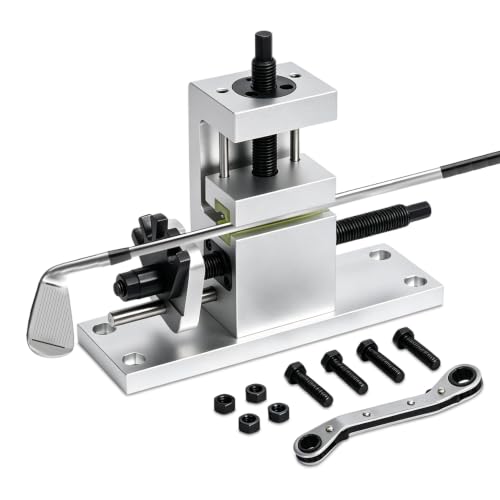
A protractor can be utilized as a simpler method for those without advanced devices. It’s essential to ensure the surface is flat for accurate readings. I also find a sturdy clamp useful to hold the club firmly in place during the assessment.
A high-quality ruler or measuring tape can help with precise measurements from the ground to the clubface, especially when aligning tools correctly.
Considerations for Accuracy
Ensure proper lighting in your workspace to clearly see the markings and readings on your tools. Depending on the environment, using a leveling device may assist in validating that everything is perfectly aligned for the most accurate results.
Step-by-step guide to measuring loft with a digital loft gauge
First, place the clubhead on a flat surface, ensuring it is stable and not rocking. Adjust the digital loft gauge so that its base aligns perfectly with the club’s face. This alignment is crucial for achieving accurate readings.
Next, gently press the gauge against the face of the club until it makes contact. Avoid applying excessive force to prevent miscalibration. The display should show the angle immediately after contact is established.
Document the reading displayed. It’s advisable to take multiple readings to ensure consistency. If necessary, reposition the gauge and repeat the process for accuracy. After confirming the readings, detach the gauge carefully to avoid altering the angle.
Tips for Accurate Measurements
Ensure the clubface is clean before taking readings, as dirt or debris can affect accuracy. Ideally, perform measurements in a controlled environment to minimize external influences, such as uneven surfaces.
After obtaining the angle, it may be beneficial to compare the results with manufacturer specifications or previous measurements to check for discrepancies. Regular checks can help maintain your clubs’ performance and adjust your setup as needed.
Measuring Angle Using a Simple Ruler and Protractor
I prefer a straightforward approach for determining the angle of clubface inclination using a ruler and protractor. This method requires minimal tools and can be done easily at home.
Required Steps
First, place the club on a flat surface, ensuring that it is positioned vertically. To establish a reference line, use a ruler and align it parallel to the ground beneath the club’s sole.
Next, hold the protractor against the face of the club, ensuring that the center point aligns with where the shaft meets the clubhead. The straight edge of the protractor should line up with the horizontal reference line from the ruler.
From here, read the angle on the protractor where the face intersects. This reading indicates the angle measured relative to the ground.
Summary Table
| Step | Action |
|---|---|
| 1 | Position club vertically on a flat surface. |
| 2 | Align ruler with the ground under the club’s sole. |
| 3 | Place protractor against the clubface, centered at the shaft. |
| 4 | Read the angle where the clubface intersects the protractor. |
This method is reliable for evaluating the incline without relying on advanced technologies. It enables an accurate understanding of how the club will perform during a swing. Practicing this technique consistently leads to improved knowledge of individual clubs in the bag.
Factors Affecting Loft Measurements and How to Account for Them
The angle of the clubhead can be influenced by several aspects that must be taken into account during assessments. One of the primary factors is the position of the club relative to the ground. Ensuring the club is placed on a flat surface will provide more accurate readings.
Environmental Influences
Environmental factors such as humidity and temperature play a role in how materials expand or contract, affecting the angle. If measurements are taken in different conditions, it’s advisable to calibrate equipment accordingly. Additionally, ensuring equipment is at room temperature can help maintain consistency.
Club Condition
The condition of the club itself impacts results. Damage such as dents or bends can alter the angle. Regular inspections for wear and tear are important. Replace or repair any components, as these can shift the design and lead to inaccurate results.
Lastly, the testing method can create variations in findings. Using multiple tools or different techniques yields diverse angles. Sticking to a single reliable method ensures consistency and accuracy over time.
Common mistakes to avoid when evaluating angle on a lob specialty club
Avoid assuming that the default angle listed by manufacturers is accurate. Always verify with your measurements, as inconsistencies can arise from production variations.
- Misalignment: Ensure the clubface is positioned correctly during each assessment. Any tilt can produce false readings.
- Inconsistent methods: Stick to one technique for all assessments. Switching between tools or approaches can lead to discrepancies in results.
- Ignoring environmental factors: Conduct measurements on a flat, stable surface. Any incline can distort the findings.
- Overlooking wear and tear: Check the club for damage or wear. These conditions can affect the effective angle and may require adjustments in your evaluation.
- Insufficient practice: Familiarize yourself with your tools before attempting a reading. This practice prevents user error and enhances accuracy.
Additional pitfalls
Don’t rush the process; take your time to ensure precision. Hasty evaluations often result in mistakes that can alter performance.
Finally, document your findings. Record keeping helps track any modifications or adjustments made over time, maintaining consistency in club performance.
Interpreting loft measurements for optimal gameplay adjustments
Understanding the nuances of loft configurations can transform my approach on the course. Each increment or decrement in the angle can significantly influence my trajectory and distance control. I analyze how this particular setting interacts with my swing mechanics and playing style. For instance, a higher angle can elevate shots, providing better stopping power on greens, while lower angles yield a more penetrating flight.
Adjusting to course conditions
Course conditions require adaptability. When playing on firm greens, I may benefit from clubs with increased angles, allowing for softer landings. Conversely, in wet conditions, maintaining lower angles can help achieve more manageable roll. I always take into account the weather and turf quality when selecting my tools for the day.
Evaluating my performance
Regularly tracking performance patterns is essential. I keep notes on shot outcomes based on different angles. If a certain trajectory consistently underperforms, I reassess the club’s specifications. This information aids in making informed choices about potential adjustments, whether it’s selecting a new club or modifying my existing one. Observing trends in my game informs whether additional tweaks are necessary to enhance my short game precision.