
 Caleb Turner

For optimal performance, I recommend a spacing of 4-6 degrees between short clubs. This range allows for manageable yardage gaps while ensuring precision and control around the greens.
Typically, I use a progression from 46 degrees for my pitching iron to around 60 degrees for the lob offering. This setup affords me versatility in shot-making, enabling soft landings and varying ball flights as necessary.

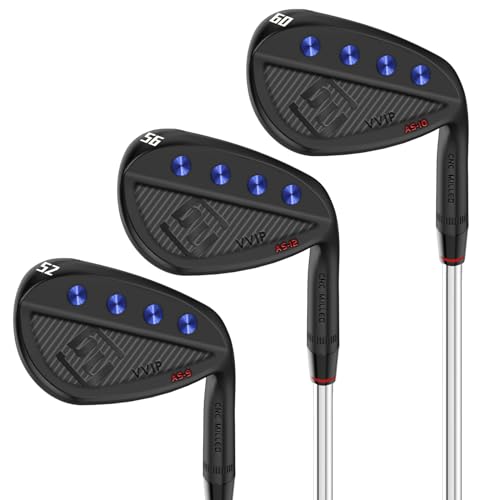

When fine-tuning my collection, I focus on factors such as personal playing style and course conditions. Adapting these angles to fit my specific needs enhances shot selection and overall scoring opportunities during a round.
Testing different configurations on the course has shown me that consistency in these angles, paired with practice, can significantly impact performance on approach and around the greens.
Recommended Loft Variations for Golf Clubs
For optimal performance, I suggest a variation of 4 to 6 degrees between each club in your short game set. This adjustment ensures that you can effectively cover various shot types without excessive overlap in capabilities.
Table of Recommended Variations
| Club Type | Typical Loft Range | Suggested Increment |
|---|---|---|
| Sand Iron | 54° – 58° | 4° |
| Gap Iron | 50° – 54° | 4° |
| Pitching Iron | 46° – 50° | 4° – 6° |
| Lob Iron | 58° – 62° | 4° |
This systematic approach simplifies the choice of clubs during play, allowing for more precise shot execution. Adjust learning curves as needed based on personal performance and comfort level with each club type.
Understanding Loft Angles in Golf Wedges
For each club, I recommend varying angles of approximately 4 to 6 degrees to achieve the desired trajectory and spin. Choosing the right options can significantly impact ball control and distance management around the green.
When selecting a short game tool, I focus on the specific shot shapes I want to execute. For example, I find that a gap club typically lands between pitching and sand options, usually ranging from 50 to 54 degrees. This allows me to fine-tune my approach based on course conditions.
It’s beneficial to consider how the angle affects the bounce. A lower angle provides a more versatile approach, while a higher angle tends to yield a softer landing, ideal for delicate shots requiring precision. Understanding these nuances can lead to tailored selections for various situations on the course.
Experimenting with different models and configurations is essential. I often test various brands to discern how they perform based on my swing style and preferred shot types. This hands-on approach enhances my confidence when addressing the ball.
I pay attention to expert recommendations and fit sessions to determine the best combinations for my game. Engaging with a knowledgeable fitter allows me to explore options that I might not have considered otherwise, ensuring I maximize my performance potential.
Regularly reassessing my arsenal is key. As my skills develop or course conditions change, I adjust my selections accordingly to optimize my short game. Keeping an open mind and being willing to adapt has proven vital throughout my golfing journey.
Common Loft Variations Between Wedge Types
In selecting the right tools for your short game, knowing the specifications of various utility clubs is paramount. For optimal performance, here’s a breakdown of typical angle variations:
Standard Configurations
- Pitching Iron: Generally ranges from 44° to 48°.
- Gap Iron: Typically set between 50° and 52°.
- Sand Iron: Usually around 54° to 58°.
- Lob Iron: Commonly varies from 58° to 64°.
Considerations for Selection
When choosing between these options, evaluate your playing style and the types of shots you prefer. For instance:
- Aiming for softer landings? A higher angle might suit you.
- Need versatility around the greens? Consider filling the gaps with intermediate options.
- For precise, short-range demands, opt for tighter angles.
Ultimately, experimenting with your setup will lead to greater precision in your approach. Adjusting these specifications according to your needs can result in improved outcomes on the course.
Impact of Loft on Shot Trajectory and Spin
To optimize shot performance, I focus on the effects that angle adjustments have on trajectory and spin. A subtle alteration in an iron’s face angle can significantly influence ball behavior. Generally, increasing the angle leads to a higher launch and softer landing. This aspect is crucial for shots requiring precision, such as approach or flop shots.
Trajectory Control
For instance, transitioning from a lower to a higher angle enhances loft, raising the ball’s peak altitude and allowing for better stopping power on greens. The steeper ascent helps in tackling hazards or navigating tight pin placements. Conversely, a lower angle can promote a penetrating strike, ideal for windy conditions or longer approaches.
Spin Generation
Raising the face angle not only affects how high the ball launches but also plays a pivotal role in spin creation. Generally, a steeper angle at impact can yield more backspin, which is instrumental in achieving control on approach shots. Golfers aiming for precision will find that managing angles helps in achieving desired spin rates for various situations.
Be mindful of how these variances can impact your game. Understanding these aspects enables me to make informed club selections and execute strategies effectively, enhancing overall performance on the course.
Choosing the Right Loft Gap for Your Set
For optimal performance, I recommend spacing the angles in your short game clubs by four to five degrees. This range allows for precise shot selection and appropriate coverage across varying distances.
Factors to Consider
- Playing Style: Assess whether you favor a more aggressive or conservative approach to your game. Tailor the angles to fit your style for better results.
- Course Conditions: If you frequently play in soft or wet conditions, consider a smaller gap to enhance control. Conversely, on firm surfaces, a wider spacing can maximize versatility.
- Distance Gaps: Ensure that each club covers a specific distance range. This makes it easier to choose the right club based on your needs during the round.
Common Configurations
- Typical setup includes 46° pitching iron, followed by 50°, 54°, and 58° clubs.
- Maintaining a trend where the lowest angle is around 60° is common for specialized short game needs.
- Some players opt for a 58° followed by a 64°, particularly for heightened control on tricky chips or delicate flops.
Review your current selection, evaluate your typical distances, and adjust accordingly to fit your individual strategy and conditions. Tailoring your options promotes confidence and precision around the green.
Adjusting Loft for Personal Play Style
To tailor your equipment to fit your unique style, I suggest considering a variance of at least two to three degrees between your scoring clubs. This means if you typically use a gap wedge at 52 degrees, your pitching wedge might be around 50 degrees and your sand wedge at 56 degrees. Maintaining these intervals helps cover the necessary distances while keeping ball flight manageable.
Experiment with Angles
Test different angles on the practice green to find what feels comfortable. For instance, I’ve noticed that slightly raising the angle on a lob wedge can improve control on delicate chips and flop shots. Always pay attention to how the ball reacts; adjusting the angle can dramatically affect your spin and stop on the greens.
Consult a Fitting Professional
Engaging with a fitting expert can provide insights that align your setup with your playing habits. They can analyze your swing dynamics and recommend adjustments that complement your natural tendencies. I found that personalized adjustments can elevate my short game to a new level.
Top Mistakes to Avoid with Wedge Loft Differences
Avoid overshooting gaps. A common error is not maintaining a consistent separation between clubs. I recommend a three to four-degree variation to ensure you have enough options for various shots.
Neglecting distance control is another pitfall. Each club must be paired with specific distances. I keep track of how far I hit each club during practice sessions, ensuring my short game remains reliable.
Many overlook bounce angles when discussing club selection. The bounce affects how the club interacts with the turf. Choosing the wrong bounce can lead to poor contact and inconsistent results in play.
Ignoring personal play style can lead to costly mistakes. I personalize my selection based on my swing characteristics. Some golfers benefit from tighter gaps, while others find wider spacing enhances their game.
Failing to consider course conditions is a significant misjudgment. Different surfaces require varied approaches. I adjust my choices based on whether I’m playing on soft or firm turf.
Another mistake is not experimenting with different setups. I frequently test various configurations during practice rounds. This helps me determine the ideal club arrangement for my needs on the course.
Lastly, don’t forget regular evaluations. Golf can be a dynamic sport, with personal abilities changing over time. I routinely assess my equipment to ensure it aligns with my current playing style and abilities.
FAQ:
What is the typical loft difference between wedges?
The typical loft difference between wedges generally ranges from 4 to 6 degrees. For instance, if you have a pitching wedge with around 46 degrees of loft, the next wedge might be a gap wedge at 50 degrees, followed by a sand wedge at 54 degrees, and a lob wedge at 58 degrees. This spacing helps players manage their short game by allowing for better distance control and shot variety.
How does the loft difference impact shot precision?
A proper loft difference between wedges can greatly enhance shot precision. With a 4 to 6 degree gap, golfers can choose the most suitable club for specific distances. For example, using a 52-degree gap wedge allows for a fuller swing to cover a certain yardage, while a 58-degree lob wedge is ideal for shorter, more delicate shots. The consistent increment in loft simplifies decision-making around the green, leading to improved accuracy and better overall performance.
Is it necessary to have multiple wedges with different lofts?
Having multiple wedges is not strictly necessary, but it can significantly improve a player’s short game. Different lofts allow golfers to approach various course situations with more confidence. For those who frequently play around the greens, it can be beneficial to carry wedges with varying lofts—typically a pitching wedge, gap wedge, sand wedge, and lob wedge. This variety can make it easier to hit different types of shots, from chips to full swings.
Can I use wedges with different lofts for different playing styles?
Yes, wedges with varying lofts can complement different playing styles. Aggressive players who prefer attacking the pin may choose to carry wedges with lower lofts that allow for longer, more powerful shots. Conversely, conservative players may favor higher lofted wedges for more control and creativity around the greens. Personal preference and the typical course conditions can guide golfers in selecting the right lofts for their game.
What is the best way to determine the right lofts for my wedges?
To determine the right lofts for your wedges, consider a few factors including your playing style, typical shot distances, and conditions you encounter on the course. Additionally, getting a fitting session with a professional can provide personalized insights. During the fitting, you can test various lofts and find the combination that yields the best results for your swing technique. Pay attention to the gaps between your clubs and how comfortable you are with each one’s performance during practice and play.
What is the typical loft difference that golfers should consider when choosing wedges?
When selecting wedges, golfers generally consider a loft difference of 4 to 6 degrees between each club. This increment allows for better distance control and versatility around the greens. For example, if a player has a pitching wedge with a loft of 45 degrees, the next club, usually a gap wedge, might have a loft of around 50 to 52 degrees. Following that, a sand wedge could be around 54 to 56 degrees, and finally, a lob wedge commonly ranges from 58 to 60 degrees. This structured difference helps players execute a variety of shots with precision.
How does the degree loft difference in wedges affect shot outcomes?
The degree loft difference in wedges plays a significant role in shot trajectory, spin, and control. A smaller loft difference, such as 2 or 3 degrees, can be helpful for players who want to maintain a consistent distance between their clubs, minimizing any drastic changes in shot length. However, it may limit the types of shots a player can execute effectively. On the other hand, a loft difference of 5 to 7 degrees can provide a golfer with more options for varying heights and spins, which is especially beneficial for short game scenarios where precision is key. This range allows golfers to approach different lies and situations with confidence, either to carry hazards or to control the ball’s roll on the green.


