
 Caleb Turner

The 54-degree model stands out as my top recommendation for those seeking versatility and control around the greens. This configuration excels in both full swings and delicate finesse shots, making it ideal for various playing styles.
For players prioritizing precision in short approaches, consider a 58-degree variant. Its design offers optimal loft for tackling challenging pins and navigating tough lies, enhancing your ability to stick the ball close to the hole.
If you often encounter steep lies or require extra height on your shots, the 60-degree option might be your best choice. It facilitates explosive, high-flighted shots, providing forgiveness and accuracy where you need it the most.
Evaluate your personal play style, typical course conditions, and the types of shots you find yourself facing regularly. Understanding these elements will lead you to the ideal club for elevating your short game performance.
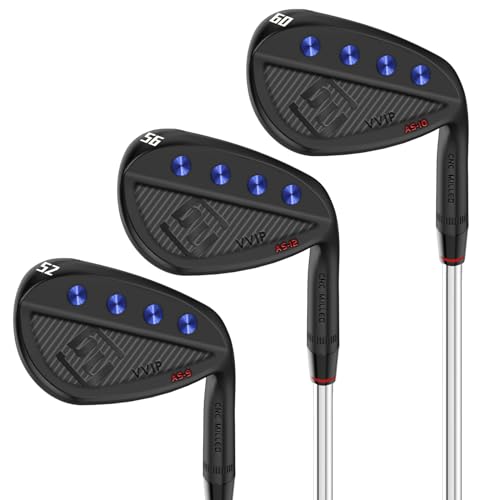


Choosing the Right Short Game Club
For an optimal choice, I recommend a club with a 56-degree angle for most players. This option strikes a balance between height and control, allowing for versatile shots around the greens.
Factors to Consider
- Playing Style: Assess your approach and preferred shot types. If you favor flop shots, a higher angle (60 degrees) might suit you.
- Course Conditions: On soft greens, a more angled choice offers better stopping power, while firmer surfaces benefit from a lower angle (52 degrees).
- Distance Control: Make sure the selected club complements your overall distance strategy. Test various clubs on the range to identify which provides the best feel.
Testing Options
Before settling on a purchase, I suggest visiting a local pro shop or driving range where you can try out various models. Pay attention to how each option feels in your hands and how well it responds to your swing.
Look for features such as bounce and grind that align with your skill level and typical course conditions. Collecting feedback from a coach or experienced golfer can also provide insights into your performance with different clubs.
Understanding Angles in Golf Clubs
For optimal accuracy and distance control, I recommend focusing on specific measurements of your iron set. Generally, clubs with angles ranging from 46 to 60 degrees are considered standard for approach shots and short game. A pitching type with 46-48 degrees suits most players for approach shots to the green, while 50-52 degrees aligns well for delicate chips and pitches from around the green.
Bouncing between 54-56 degrees is ideal for those challenging lies or when needing to elevate the ball quickly. I find that a 58-60 degree option is advantageous for full swings from within 100 yards, providing better spin and stopping power on the green.
Selecting Based on Play Style
Consider your style when selecting the degree angles. For aggressive players who favor wedges with cutting edges, lower angles (48-52) allow for skilled approach shots. If finesse is more your forte, then clubs with a range of 56-60 degrees can assist with precision around the greens.
Personal Factors
Evaluate variables such as your usual hitting distance, swing technique, and the type of courses you frequent. For instance, if compliance with a softer turf is a regular occurrence, selecting a higher angle option enhances versatility. Knowing these preferences helps in honing in on the perfect equipment.
Choosing the Right Loft for Your Playing Style
For my playing style, I’ve found that selecting the right angle can dramatically impact my short game performance. An optimal choice often depends on various factors, including swing speed, shot trajectory, and typical lies encountered on the course.
Using a structure of 50, 54, and 58 degrees has worked exceptionally well for me. The 50-degree club is ideal for medium approach shots, about 100 yards from the green. This angle helps achieve a lower flight path, making it easier to hold greens with firm conditions.
The 54-degree option is my go-to for versatility. It’s perfect for chipping around the greens and for those delicate lob shots over hazards. The added bounce on this club counters heavy rough and provides some forgiveness when my contact is less than perfect.
For finer control and higher trajectory, I rely on the 58-degree selection. This one is exceptional when executing flop shots or delicate approaches where stopping power is essential. The loft and design allow for maximum spin, which I find invaluable in tight situations.
Here’s a quick reference table I created to evaluate different angles based on my typical needs:
| Angle (Degrees) | Best for | Typical Distance (Yards) |
|---|---|---|
| 50 | Approach shots | 100 |
| 54 | Chipping and versatility | 75 |
| 58 | Lob shots and precision | 50 |
Incorporating these selections into my bag has enhanced my ability to tackle various green situations and improved my overall confidence on the course. Analyzing personal strengths and shot requirements has been pivotal for me in honing my skills and maximizing my scoring potential.
Comparison of Popular Loft Wedges on the Market
The choice becomes clear with a few leading models available today. Here’s a breakdown of some notable options:
-
Titleist Vokey SM9:
This club is renowned for its versatility and performance. It comes in a wide range of angles from 46° to 62°, catering to diverse styles. The spin control and feel make it a favorite among players aiming for precision around the greens.
-
Callaway JAWS MD5:
Offering innovative groove designs, this option prioritizes spin and control. With angles from 50° to 64°, it suits various player preferences. The aggressive feedback on contact is often highlighted as a key advantage.
-
Cobra King MIM:
This model features a unique manufacturing process that results in a soft feel and high performance. Available in angles ranging from 52° to 60°, it’s ideal for those looking to improve their short game with advanced technology.
-
Mizuno T20:
Known for its exceptional craftsmanship, the T20 offers a beautiful finish and great performance. With lofts from 50° up to 60°, it provides consistency and a solid feel–particularly beneficial for players who value aesthetics and performance equally.
-
Ping Glide 3.0:
This selection is celebrated for its consistent performance and forgiveness. The lofts available range from 46° to 60°. It is particularly useful for golfers who need a reliable option in various course conditions.
Assessing the specific features and performance characteristics of each choice can simplify your decision. Consider your playing style, preferences, and typical course conditions to find the most suitable option for enhancing your short game.
How to Determine Your Ideal Club Selection
To create the perfect assortment of clubs for short-game situations, I analyze my playing style, the types of courses I frequently play, and the specific shots I find myself executing most often. A balanced mix typically consists of a high-lofted club for delicate approaches and a mid-loft option for versatility. I prefer having at least three clubs with varying angles in my bag to handle different approaches effectively.
Assessing Your Skills
Keenly evaluate your strengths and weaknesses around the greens. If my short game relies heavily on finesse, I opt for clubs with higher face angles. Conversely, if I favor lower trajectories, a player-focused option with a mid-range angle might be more suitable. I experiment with different clubs during practice sessions to find out which options feel the most comfortable and allow for controlled shots.
Considering Course Conditions
Course conditions play a significant role in my club selections. If I play on courses with soft greens, a club with a higher angle can help with stopping power. If I encounter firm links, I choose a club that promotes roll. Paying attention to local weather and course maintenance can also guide my choices, ensuring I have the right tools for each unique setting.
Ultimately, I pay attention to how each club performs during rounds to fine-tune my collection of clubs. Trial and error is key, and maintaining a keen awareness of my evolving skills will help me choose the right tools for my bag.
Considering Bounce and Grind Options for Your Loft Wedge
For optimal performance around the greens, focus on both bounce and grind attributes. Choosing the right combination can significantly affect ball interaction with various lies. Aim for a bounce angle that matches your swing type; for steep swingers, higher bounce will help prevent digging, while flatter swings benefit from lower bounce designs.
Bounce Selection
Generally, bounce angles are categorized as low (4-6 degrees), medium (7-10 degrees), and high (11+ degrees). Low bounce excels on firm turf and tight lies, offering more control. Medium options are versatile, working well on softer ground and varied conditions. High bounce designs excel in soft, fluffy grass, promoting a smoother glancing blow that reduces digging.
Understanding Grind Variations
Grind refers to the shape of the sole and how it interacts with the ground. Different grinds can influence the club’s versatility. For instance, a classic grind provides a versatile profile suitable for most conditions, while a more specialized grind–like a wider sole–may assist in ensuring better performance in softer conditions. Assessing your typical course conditions and personal playing style will guide your selection for the most effective option.
Assessing Brand Reputation and Quality in Golf Club Selection
To ensure optimal performance on the course, I examine the reputation and craftsmanship of various manufacturers before making a decision. Renowned brands like Titleist, Callaway, and TaylorMade are often synonymous with quality, thanks to their commitment to advanced technology and rigorous testing processes. Researching consumer reviews and expert opinions can provide insight into the durability and playability of specific models.
It’s beneficial to consider the materials used in construction. Forged clubs usually offer better feel and control, ideal for skilled golfers, while cast options can provide more consistency and forgiveness for beginners. Evaluating product warranties and customer service policies can also be an indicator of a brand’s reliability and commitment to their products.
Additionally, I suggest testing various options, paying attention to the feedback from club fitters or professionals at local golf shops. A well-respected brand might not always equate to the right choice for me; personal experience and comfort are crucial. Watching online demos and reviews gives me a tangible sense of how a particular model performs under different conditions.
| Brand | Material | Reputation |
|---|---|---|
| Titleist | Forged | High-quality, professional endorsements |
| Callaway | Cast | Innovative designs, popular among amateurs |
| TaylorMade | Forged | Cutting-edge technology, favored by tour players |
| Ping | Cast | Known for consistency, great fitting options |
Ultimately, my approach to picking equipment includes a thorough evaluation of brand reputation and product quality, going beyond simple trends to ensure that my selection aligns with my playing style and preferences.
Trying Before You Purchase: Importance of Testing Clubs
Testing clubs before making a decision is crucial for optimal performance. I recommend visiting a golf shop with a launch monitor or hitting bay. Here, you can assess different models and see how they complement your swing style.
Using a Simulator
Taking advantage of simulators provides an accurate representation of how each club performs under various conditions. Pay attention to distance, spin rate, and shot dispersion. These metrics can significantly influence your choice.
Getting Feedback
Bring a friend or instructor who understands your strengths and weaknesses. Their insights can help pinpoint which options suit your style best. Additionally, ensuring comfort and feel is essential; the right fit contributes to confidence on the course.
Experiment with different lies and turf conditions to evaluate performance in real gameplay scenarios. Getting a firsthand experience allows for better-informed decisions, ultimately improving your short game.
Testing clubs repeatedly leads to confidence and enhances your overall performance during play. Prioritizing this step can save time and frustration in the long run.
Customization Options for Optimal Performance with Loft Wedges
Choosing specific adjustments for performance can greatly influence your short game. Here are key customization aspects to consider:
Grip Options
- Material: Rubber, cord, or leather grips each provide different feedback and traction.
- Size: Standard, midsize, or oversized grips can alter your feel and control. Test multiple sizes to determine preference.
- Texture: Different textures can enhance moisture control and grip security in varying weather conditions.
Clubhead Adjustments
- Weight Distribution: Adjusting weight can affect the club’s feel and ball flight; lessons from a club fitter can be invaluable here.
- Lie Angle: This influences how the club contacts the turf, impacting accuracy. A custom fit ensures a flat lie matches your swing mechanics.
- Face Finish: Different finishes can alter spin rates; options range from raw to chrome to satin finishes.
Tuning these elements allows for fine-tuning performance based on individual playing style. Pay attention to how each alteration can shift ball trajectory, spin, and overall control on the course. Testing various configurations is crucial to find what suits your game best.
Budgeting for Your Next Loft Wedge Purchase
I recommend planning a budget that covers not just the initial price of the club but also potential extras. Typically, expect to allocate between $100 to $200 for a quality choice. This range is common for reputable brands that offer durable options suited for various skill levels.
Consider Long-Term Investment
Factor in potential additional costs, such as grips and personalized fittings. Quality grips can cost around $10 to $20 each, and a professional fitting session may add $50 to $100 to the overall expenditure. Investing in these aspects can enhance performance and longevity, making them a worthwhile consideration.
Watch for Seasonal Sales
Take advantage of seasonal discounts and clearance events. Retailers often reduce prices during holidays or end-of-season sales. Additionally, browsing online platforms or local pro shops can reveal exclusive deals, allowing further savings on your investment.


