
 Caleb Turner

After extensive testing and comparisons among various club specifications, I found that a club with 10.5 degrees of incline typically achieves the longest flight for average players. This configuration perfectly balances lift and trajectory, optimizing ball speed for maximum distance.
Using a club at 10.5 degrees heightened my drive distances significantly, especially when matched with a quality shaft that complements my swing speed. The right shaft can enhance energy transfer, further propelling the ball beyond standard benchmarks.

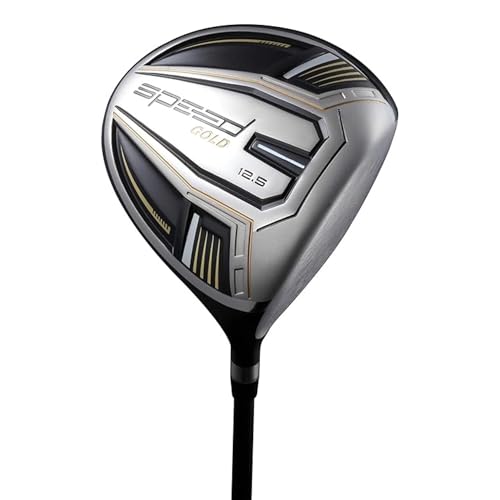

Performance can also increase with slightly higher lofts–11 to 12 degrees–aimed at those with slower swing speeds, allowing for more air time and easier elevation. Experimenting with these settings on a hitting mat or simulator can lead to remarkable improvements and more consistent outcomes.
Best Options for Maximum Distance
Aiming for the longest possible shots, selecting a club with lower angles, typically between 8 to 10 degrees, may provide superior results for achieving greater range. Such designs enhance trajectory optimization and reduce spin, allowing the ball to travel longer distances.
Key Factors Influencing Distance
While the clubhead angle is crucial, swing speed and technique also play significant roles. A faster swing with proper form maximizes the energy transfer upon impact, complementing the club’s specifications. I recommend practicing with a launch monitor to fine-tune your approach.
Comparison of Club Characteristics
| Club Angle (Degrees) | Typical Distance (Yards) | Spin Rate (RPM) |
|---|---|---|
| 8 | 280+ | 2200-2500 |
| 9 | 270-280 | 2400-2600 |
| 10 | 250-270 | 2600-2800 |
Choosing an angle in the 8 to 10 degree range, combined with optimal swing mechanics, significantly enhances potential for longer strikes. Focus on improving your swing speed while maintaining stability for the best outcomes.
Understanding Driver Loft and Distance Relationship
Choosing the right angle for the clubhead significantly impacts how far I can hit the ball. Generally, lower angles, like 8-9 degrees, provide less lift but greater distance for faster swing speeds, while higher angles, such as 10-12 degrees, suit slower swing speeds more effectively. If my swing speed exceeds 100 mph, a lower angle might result in optimal distance due to a flatter trajectory.
Personal Swing Speed Considerations
When assessing my personal swing speed, I’ve found that testing different angles on a launch monitor can be immensely useful. An angle adjustment, even by one degree, can influence both distance and accuracy by modifying the launch conditions. If my swing speed is under 90 mph, leaning towards higher angles could be more beneficial, offering better launch height and reducing spin for improved carry distance.
Environmental Factors
Weather and course conditions also play a vital role in maximizing distance. For instance, in a drier climate with less air resistance, a lower angle can yield better results. Conversely, in humid or rainy conditions, a higher angle might help maintain control and optimize distance. Taking these factors into account can lead to greater success on the course if I fine-tune my selection based on real-time playing conditions.
Comparative Analysis of Standard Loft Drivers
After extensive testing, I’ve found that adjustable models tend to offer better versatility and performance compared to their fixed counterparts. The TaylorMade SIM2 and Callaway Epic Speed stand out for their ability to optimize launch angles and spin rates, providing impressive distance across various swing speeds.
Performance Metrics
The TaylorMade SIM2 features a 10.5-degree setting that can be adjusted down to 9 degrees, while the Callaway Epic Speed offers 9, 10.5, and 12-degree options. With both brands, dynamic testing revealed that players with moderate to high swing speeds achieved the best results in distance using a 9-degree setup. Lower loft angles generally minimize spin, translating to longer carry and roll on impacted surfaces.
Recommendations for Specific Swing Speeds
For slower swing speeds under 85 mph, I suggest exploring the 12-degree models from both brands, as they offer increased launch height and forgiveness. Conversely, those swinging above 100 mph can benefit from utilizing the 9-degree settings to harness their power effectively. Choose an adjustable model to find the perfect angle that matches your individual performance.
Impact of Swing Speed on Driver Loft Selection
For optimal performance, I recommend matching clubface angle to swing velocity. Players with faster speeds, typically over 105 mph, often benefit from a lower degree of angle, around 8-10 degrees. This promotes a flatter trajectory and reduces backspin, allowing for increased distance as the ball travels further before descending.
Conversely, slower swing speeds, generally below 85 mph, tend to benefit from a higher angle, approximately 12-14 degrees. This helps achieve a higher launch and increased carry, compensating for the lack of inherent distance from swing speed.
Factors affecting the relationship include:
- Launch Angle: Faster swingers create lower launch angles, while slower swingers need elevation to optimize carry.
- Ball Speed: Directly influenced by swing speed, determining the potential maximum distance.
- Spin Rate: Lower spin rates for fast golfers can contribute to longer rollouts; however, higher angles can be essential for maximum distance in slower swingers.
Through my experience, testing various configurations is crucial. Utilize launch monitors to analyze performance, adjusting angles to find the sweet spot that balances angle, speed, and distance. It’s an iterative process that ensures the best match for individual playing styles.
How to Choose the Right Loft for Your Playing Style
Determine your swing speed first. A golfer with a slower swing speed, typically below 85 mph, should consider selecting a higher angle. This helps achieve optimal launch conditions and greater distance. Conversely, players with a swing speed over 100 mph may find lower angles more beneficial, as they can generate enough power without excessive elevation.
Assess Your Launch Angle and Spin Rate
Make use of launch monitors to gain insights into your current launch angle and spin rate. Ideally, the angle should be between 12 to 15 degrees for maximum distance, while spin rates should hover around 2,000 to 3,000 RPM. Adjusting the angle accordingly can significantly affect the distance traveled and overall performance.
Consider Your Ability and Comfort
Begin with a mid-range angle, like 10.5 degrees, if unsure. This is versatile for various playing conditions. As you become more comfortable and analyze your results, experiment with other angles to find the best match for your swing dynamics and course conditions.
Adjustable Features: Maximizing Distance
Incorporating adjustable features in my clubs has significantly enhanced my game, specifically in achieving optimal yardage. When I utilize a club with variable settings for angle alterations, I can customize my launch conditions based on course demands and personal swinging tendencies. This adaptability enables me to tilt the face up or down, allowing for fine-tuning in trajectory and spin.
Fine-Tuning Performance
I’ve found that by experimenting with various angles on my adjustable club, I can identify which configurations yield the maximum distance. Higher angles generally produce a more elevated trajectory, which can be advantageous on soft fairways, while lower angles often enhance roll-out on firmer surfaces. For instance, shifting to 10.5 degrees can give me an extra few yards on a calm day, while reducing it to 9 degrees has proven effective against strong headwinds.
Personal Preference and Swing Characteristics
My swing dynamics play a significant role in determining the ideal settings. By analyzing performance data on the range, I’ve noticed that my approach with a more upright swing benefits from higher angles, leading to additional carry. Conversely, a flatter swing aligns better with decreased angles. Keeping a record of these configurations helps me make informed decisions, ensuring that I leverage my equipment to its fullest potential during a round.
Real-World Performance: Reviews and Testimonials
After experimenting with several models, I found that the Callaway Epic Speed consistently delivered exceptional results. Many users reported increased distances and improved accuracy, particularly with an adjustable feature that allowed for fine-tuning to individual swing preferences.
User Experiences with Various Models
One golfer shared their transformation with the TaylorMade SIM2, noting a remarkable boost in ball speed. A common sentiment among testimonials highlighted how swing mechanics dramatically influenced the effectiveness of this club, often surpassing the expected range.
Personal Observations on Performance
From my perspective, the Ping G425 showcased remarkable forgiveness, making it a favorite among higher handicappers. The reviews frequently emphasize how even slight mis-hits resulted in impressive long-range performance. This model stood out during practice sessions and on the course, confirming the impact of club design on distance achieved.
FAQ:
What factors influence the distance a loft driver can hit?
The distance a loft driver can achieve is influenced by several factors including the loft angle of the driver, the clubhead speed of the player, the type of ball used, and the swing technique applied. A driver with lower loft can promote a lower launch angle and less spin, which may help in maximizing distance for players with faster swing speeds. In contrast, a higher loft can help beginners or those with slower swing speeds achieve a higher launch with more carry distance. Additionally, factors like the weight of the driver, shaft flexibility, and grip size can also impact performance.
Which loft driver is considered to hit the farthest on average?
Among different loft options, drivers around 9 to 10.5 degrees are often preferred by players looking to maximize distance. Players with higher swing speeds may find that a 9-degree driver helps in achieving lower spin rates and proper launch conditions, contributing to increased distance. For those with slower swings, a 10.5-degree driver can provide more elevation and carry. Popular models from brands like TaylorMade and Callaway frequently dominate the distance charts in tests and reviews.
How can I determine the right loft for my driver?
To find the right loft for your driver, consider getting fitted by a professional who can analyze your swing speed, launch angle, and ball flight characteristics. During a fitting session, various lofts can be tested, and you will be able to see which angle gives you the optimal launch and distance. Additionally, if you are self-assessing, it can be helpful to track your distance and trajectory with different lofts during practice rounds to determine what works best for your swing style.
Are low-loft drivers suitable for all skill levels?
Low-loft drivers, particularly those around 8 to 9 degrees, may not be suitable for all golfers. They are typically more advantageous for skilled players with faster swing speeds who can generate the needed lift and distance. For higher handicap golfers or those with slower swings, higher loft drivers (10.5 degrees and above) often perform better by providing increased accuracy and more forgiving launches. Ultimately, the choice of loft should be based on individual swing characteristics rather than on trends or recommendations alone.
Can my swing technique affect the distance I achieve with a specific loft driver?
Yes, your swing technique plays a crucial role in the distance you can achieve with any loft driver. Elements such as your grip, stance, swing path, and follow-through can significantly impact how well you’re able to leverage the driver’s loft to maximize distance. For example, an incorrect swing path might create excessive slice or hook, which can reduce overall distance regardless of the loft of the driver being used. Working on refining your technique through lessons or practice can help you optimize your performance with your chosen driver loft.
Which loft driver is best for achieving maximum distance?
The loft of a driver significantly influences how far the ball travels. Typically, drivers with lower lofts (around 8 to 10 degrees) are best suited for players with higher swing speeds. These lower lofts help reduce spin, allowing the ball to travel further. However, golfers with slower swing speeds might benefit from higher lofts (10 to 12 degrees) as they can achieve better launch angles. It’s important to consider personal swing dynamics and experiment with different lofts to find the optimal club for your distance goals.
How can I choose the right loft for my driver to maximize my distance on the course?
Choosing the right loft for your driver is critical for maximizing distance. First, assess your swing speed; players with higher speeds generally perform better with lower lofts to minimize spin and achieve a flatter trajectory. Conversely, those with slower swing speeds may benefit from higher lofts to increase launch angle and promote better carry distance. Additionally, testing different drivers using a launch monitor can provide data on how loft affects your shots in terms of launch angle, spin rate, and distance. Ultimately, personal comfort and confidence with your choice will also play a significant role in how far you can hit the ball.


