
 Caleb Turner

When selecting a set of golf clubs, it’s vital to comprehend their specifications, particularly the angles of the clubheads, which significantly affect ball trajectory and distance. With Callaway’s line of clubs, understanding these measurements can enhance your performance on the course. The 4, 5, 6, and 7 clubs are usually designed around standard angles that promote distance and forgiveness, typically ranging from 19 to 32 degrees.
For the mid-range options, from 8 to 9, expect the angles to be between 36 and 40 degrees, aimed at providing optimal control and accuracy. Pitching wedges often have a loft near 44 degrees, while the sand wedges are commonly around 54 to 56 degrees. This configuration allows for effective handling in diverse playing conditions, especially in tricky lies.
The specific choices you make in loft angles will influence everything from your launch angle to spin rates. Matching these angles to your personal playing style and conditions can significantly improve your outcomes on the course. Each option in this collection offers unique benefits tailored to a variety of player needs.
Loft Specifications for Callaway Rogue Line
For those looking to fine-tune their game with precise angles, the specifications for these clubs provide clarity. Below are the details for the various clubs:
- Pitching Wedge: 44 degrees
- 9 Iron: 41 degrees
- 8 Iron: 37 degrees
- 7 Iron: 34 degrees
- 6 Iron: 30.5 degrees
- 5 Iron: 27.5 degrees
- 4 Iron: 24.5 degrees
Understanding these angles helps in making informed choices when selecting the right club for your shots. Each club’s specifications are crafted for optimal performance at varying distances.


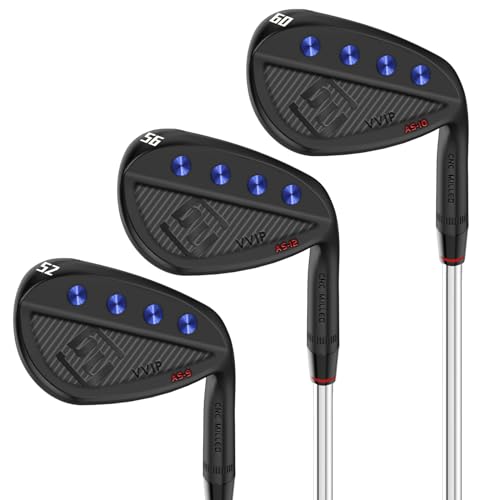
Whether you are seeking more control or distance, knowing these values will aid in achieving your desired outcome on the course.
Understanding the Loft Specifications of Callaway Rogue Irons
For optimal performance, I assess the angle measurements of each club in this series. Generally, these designs feature a set that includes varying degrees, catering to distinct shot distances and player preferences. For instance, the pitching wedge typically sits around 44 degrees, while the 9-iron hovers near 40 degrees. Mid-irons like the 7-iron are often at about 34 degrees, enabling precise ball elevation for greater control.
My experience indicates that the transition from long to short clubs demonstrates gradual decreases in the degrees, allowing for consistent yardage gaps. The 6-iron often measures around 30 degrees, and the 5-iron usually resides at approximately 26 degrees, assisting with longer approach shots.
Familiarizing myself with these numbers aids in selecting the right club for varying conditions. By adhering to these specifications, I can confidently make informed club choices during a round. It’s advantageous to keep a personal record of distances associated with each club based on individual swing characteristics, enabling tailored performance on the course.
How Loft Angles Affect Your Golf Shots
Choosing the right angle can be the difference between a good shot and a great one. Optimal angles can enhance distance, accuracy, and trajectory. Understanding how these measurements influence your swing is key.
Lower angles tend to promote a lower trajectory, beneficial for players looking to achieve more run on the green. Conversely, higher angles generate a steeper flight path, perfect for maximizing height and stopping power on the green. It’s vital to match the angle to your playing style and specific shot requirements.
| Shooting Angle | Trait | Best Use |
|---|---|---|
| 20° | Low trajectory | Longer swings, more roll |
| 30° | Medium trajectory | Versatile shot shaping |
| 40° | High trajectory | Precision on the green |
I recommend experimenting with different angles to see how they affect your game. Track your shots and adjust based on performance. Fitting your clubs to your style brings out your best potential.
Pay attention to wind and course conditions. Sometimes, a lower or higher angle might be necessary to compensate for external factors. The more in tune you become with these aspects, the better your overall results will be.
Comparing Loft Angles of Different Callaway Rogue Iron Models
When evaluating the various models in the Callaway lineup, I focus on the specific angle measurements. Each variant offers distinct loft specs, impacting my distance and trajectory. For example, the standard model typically features angles ranging from 20° for the 4-iron to 43° for the pitching wedge. In contrast, the pro model adjusts these measurements slightly for added playability, with the 4-iron at 19° and the wedge at 44°.
The X-series also presents lofts that differ, providing a more game-improvement approach. Here, the 4-iron hovers around 21°, while the pitching wedge settles at 42°. These nuances allow me to choose based on my skill level and desired performance.
For better customization, I seek to understand my launch angles in relation to the selected model. Changing loft angles can significantly affect how high the ball rises and falls, which is crucial for aligning shots according to course conditions. Adjusting my set composition by incorporating different lofts can also fine-tune my bag setup, ensuring I have coverage across varying distances.
Paying close attention to these specifications proves beneficial, as slight tweaks in loft can lead to improved accuracy and consistency. I adapt my strategy based on these variances, optimizing my performance on the course.
Choosing the Right Loft for Your Swing Style
For optimal performance, I recommend evaluating your swing mechanics before selecting a specific loft angle. A lower loft is suitable for faster swing speeds, allowing for a penetrating trajectory and increased distance. Conversely, those with slower swings might benefit from higher angles, providing better launch and control.
When analyzing personal swing style, consider factors such as angle of attack, swing path, and tempo. For a descending strike, a slightly lower loft might enhance accuracy, while a sweeping swing could warrant a more elevated loft to achieve optimal height.
Testing different configurations on the range helps identify the right fit. I noticed that adjusting lofts can significantly influence not just distance, but also the ball’s stopping power on greens. Moreover, experimenting with variations based on course conditions–like wind and terrain–can fine-tune my performance.
I often find that consulting with a fitter provides valuable insights into how loft angles interact with my clubhead speed and launch angle preferences. This tailored approach enhances the overall experience on the course, allowing me to make informed decisions regarding equipment.
Aligning loft choice with my swing characteristics results in more consistent ball flight and improved scoring opportunities. Always remain open to adjustments, as playing styles can evolve over time, demanding reassessment of loft preferences.
How to Measure and Adjust Loft Angles on Callaway Rogue Irons
To achieve optimal performance, measuring and adjusting loft angles requires precision. Follow these steps:
Measuring Loft Angles
- Use a reliable loft and lie angle gauge for accuracy.
- Place the clubhead flat against a surface, ensuring the sole rests evenly.
- Align the gauge with the leading edge of the face; read the loft angle directly.
Adjusting Loft Angles
Adjustment typically involves a professional fitting session or utilizing adjustable clubs.
- For fixed clubs, consult a certified club fitter who can bend the club to desired specifications.
- If using adjustable models, locate the setting mechanism, usually at the hosel, and follow manufacturer’s instructions to modify the loft.
After adjustments, retest the loft angle to confirm accuracy. Keep in mind that slight changes in loft can significantly impact trajectory and distance, so make fine adjustments based on your playing style and preferences.
Impact of Loft on Distance and Trajectory
Adjusting angles can significantly influence the distance and trajectory of your shots. A higher angle results in a steeper launch, which can be beneficial for achieving greater heights with less distance. Conversely, lower angles lead to a flatter trajectory, extending distance but reducing overall height.
Distance Variability
Finding the right angle affects my range. For example, using a club with a 30-degree angle typically gives me about 150 yards, while a 26-degree angle can add up to 180 yards. Thus, assessing swing speed and power can be key to maximizing gains.
Trajectory Control
With a pronounced angle, I find my shots soar higher, allowing for better stopping power on greens. With flatter angles, the trajectory hangs lower, providing more roll after landing, which can be useful on firm fairways. Adjusting accordingly to course conditions enhances my approach strategy.
Understanding these dynamics enables informed choices when optimizing my setup, ensuring I can tackle various environments effectively.
Recommendations for Optimal Loft Pairing with Other Clubs
Match the pitching wedge with sand wedges for consistent short-game performance. A pitching wedge around 44-46 degrees complements a sand wedge at 54-56 degrees, providing a smooth transition for delicate shots around the green.
For a balanced set, consider your gap wedge to bridge the distance between your pitching and sand wedges. A gap wedge typically ranges from 50-52 degrees, ensuring you’re covered for gaps in your short-game arsenal.
When mixing in hybrid or fairway wood clubs, select their lofts strategically for easier yardage management. For example, an 18-20 degree hybrid can effectively replace a 3-iron, while a 22-24 degree hybrid aligns closely with a 5-iron, ensuring a seamless flow in your approach game.
Long irons require a careful pairing; if using a 4-iron at approximately 22 degrees, a 5-iron around 26 degrees completes the set nicely, compensating for launch angles and maximizing distance.
Evaluate your driver loft for consistent performance off the tee. A driver loft between 9-12 degrees works well with these clubs to ensure optimal ball flight and carry distance, especially for players with varying swing speeds.
As you build your set, assess your current equipment and individual swing mechanics. Fine-tuning your club selection around specific lofts is imperative to create a versatile bag that addresses every distance and shot type on the course.
FAQ:
What are the unique features of the lofts on Callaway Rogue irons?
The lofts on Callaway Rogue irons are designed to enhance distance and accuracy. Each iron in the set has a specific loft angle, which affects the trajectory and distance of the golf ball. The Rogue irons typically feature a higher loft in the shorter irons, allowing players to achieve greater height and control with their shots. This design helps golfers to get the ball up in the air more easily, especially with the mid and short irons, which is particularly useful for approach shots to the green.
How do the lofts on Callaway Rogue irons compare to traditional lofts?
Callaway Rogue irons generally have a slightly stronger loft compared to traditional irons. This means that the loft angles are lower than the standard norms, resulting in longer distances with each club. For instance, a 7-iron in the Rogue set may have a loft that is a degree or two lower than what you would typically find in older models. While this promotes extra yardage, it’s important for players to adjust their expectations with distances, ensuring they are aware of how these loft changes impact their game. However, this loft design does not compromise control or accuracy, which are crucial for effective iron play.
How can golfers know which loft is best for their swing style?
Choosing the appropriate loft for your swing can depend on various factors such as swing speed, skill level, and personal preference. Golfers can start by visiting a professional club fitter or using a launch monitor to analyze their ball flight and clubbing preferences. The fitting process helps determine which loft angles yield the best performance based on individual swing dynamics. It’s recommended that golfers test different lofts during practice sessions, paying attention to how the ball reacts with different clubs, so they find the lofts that best suit their style and enhance their accuracy on the course.
Do the lofts on Callaway Rogue irons affect the overall feel and feedback during play?
Yes, the lofts on the Callaway Rogue irons can significantly influence the feel and feedback a golfer experiences during play. The design of the clubs, including the loft angles, affects how the club interacts with the ball at impact. Players often report that the Rogue irons provide a solid and responsive feel, partly due to their engineered lofts which help in achieving better launch conditions. The hollow-body construction in some of the irons also contributes to enhanced feedback, allowing players to sense the quality of their shot. Understanding how these factors relate to each club’s loft can help golfers make more informed decisions about their equipment choices.


