Caleb Turner

Choosing an angle is critical for maximizing distance and accuracy in your golf shots. A higher angle can help improve trajectory, making it easier to launch the ball into the air. For those using a club with a higher angle, expect a greater arc and increased lift, which is beneficial on drives that require significant elevation.
It’s vital to tailor your angle to your personal swing style and skill level. If you struggle with slicing or hooking the ball, adjusting the angle might contribute to straighter shots. Additionally, players who have a slow swing speed often benefit from a higher loft, as it can help get the ball off the ground more easily.

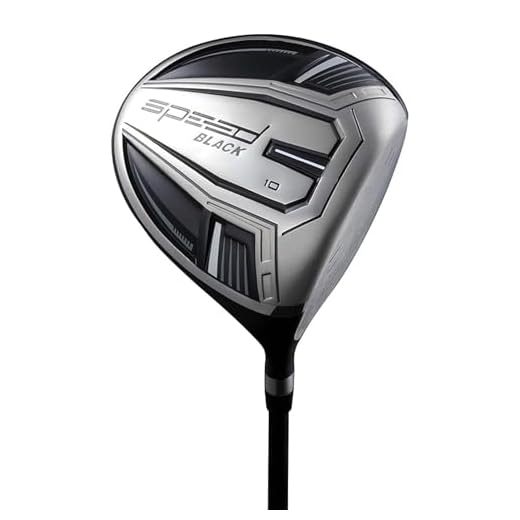

When selecting your equipment, consider experimenting with various angles. Testing different clubs with adjustable features allows you to find the optimal setting that complements your swing. Remember, the right angle is not a one-size-fits-all solution; it’s about finding what enhances your performance on the course.
Understanding Elevation Angle for a Golf Club
A higher elevation angle increases trajectory, often aiding in launch conditions. For players needing more height, selecting a club with increased angle can lead to better performance, especially on courses with obstacles or when allowing for softer landings on greens.
Choosing a club with a lower angle benefits those seeking a flatter ball flight, maximizing distance on firm fairways. It’s particularly useful for advanced players who can generate their own elevation and prefer a penetrating ball flight that rolls out further upon landing.
To accurately assess personalization, consider experimenting with adjustable clubs that allow modifications to elevation. Finding the optimal setting can have a significant impact on trajectory and overall results.
Evaluating your swing speed is critical; faster swings may require a different angle to achieve ideal launch conditions compared to slower ones. Keep in mind that changing technique or equipment can necessitate a re-evaluation of your strategy.
Consistent practice with various club angles will highlight performance shifts, allowing for more informed decisions on equipment purchases and fitting sessions. This iterative approach refines skills and enhances on-course performance.
Collect data from rounds played or sessions at a driving range to inform future decisions. Observational feedback from swings with different angles can guide necessary adjustments for optimal results.
Understanding Loft Angles in Golf Drivers
To optimize performance, select a club with an angle tailored to your swing speed and ball trajectory. Higher angles, typically ranging from 10.5 to 12 degrees, assist players with slower swing speeds by maximizing distance and height. If you possess a faster swing speed, a lower angle, such as 9 to 10 degrees, may be ideal for controlling trajectory while maintaining distance.
Experimenting with different angles can reveal your ideal setup. I recommend testing clubs in a fitting session to evaluate how various angles influence your ball flight. Incorporating launch monitors can provide precise data on launch and spin rates, enabling informed adjustments.
Additionally, an increased angle tends to enhance carry distance, especially beneficial on courses where elevation might hinder the ball’s travel. Conversely, a lower angle promotes roll on landing, advantageous on firm fairways.
Consider how your natural swing path interacts with angle selection. A neutral or upward strike benefits from a higher angle, while a downward strike might require a lower setting. Gathering insights from your shots will guide you in refining your equipment choice.
Incorporating this knowledge will enhance your confidence on the tee, allowing you to make selected swings with purpose and drive. Empower yourself with the right club setup and witness the immediate benefits in your game.
The Impact of Loft on Ball Trajectory
Adjusting the angle can significantly influence how the ball travels through the air. A higher angle typically results in a steeper ascent and a softer landing, which can be advantageous for gaining distance on par 5s or for approach shots. In contrast, a lower angle promotes a flatter trajectory, favoring roll upon landing, ideal for those who want to maximize distance on drives.
- Increased angle helps achieve higher launch, which can be beneficial in achieving distance but may be less stable in windy conditions.
- Lower settings favor reduced spin, leading to a more penetrating flight that can perform well in various conditions.
To refine your distance and accuracy, consider these factors:
- Experiment with different settings during practice sessions. Observe how the ball reacts to various angles and adjust based on your swing.
- Take into account your ball speed and swing characteristics. Higher swing speeds might benefit more from adjustable angles to optimize launch conditions.
- Monitor environmental conditions, such as wind and altitude, which can affect the optimal settings for your equipment.
The right angle can enhance your overall game, assisting in achieving desired flight paths and distance. Personalization through equipment adjustments can greatly affect performance and playability on the course.
Choosing the Right Loft for Your Swing Speed
For optimal performance, I recommend selecting an angle between 9 and 12 degrees based on your swing speed. Higher speeds benefit from lower angles, while slower swings should consider steeper angles to achieve maximum carry distance.
Swing Speed Recommendations
Here’s a breakdown of angles based on swing speed:
| Swing Speed (mph) | Optimal Angle (degrees) |
|---|---|
| Below 85 | 11-12 |
| 85-95 | 10-11 |
| 95-105 | 9-10 |
| Above 105 | 8-9 |
Adjusting Based on Performance
After testing with a specific angle, analyze your flight path. If the ball tends to hook or slice, consider slight adjustments to the angle. Additionally, using launch monitors can provide precise feedback, allowing me to fine-tune my choice further.
How Loft Affects Distance and Accuracy
Selecting the appropriate angle on your club can significantly influence both the distance the ball travels and how accurately it reaches its target. A higher angle tends to produce a higher trajectory, which can lead to increased carry distance, especially on courses with windy conditions.
Distance Implications
A key factor is that an increase in trajectory often results in longer carry distances. Here are several points to consider:
- Higher angles assist in launching the ball into the air more easily, allowing for less roll on landing.
- With a more pronounced angle, players with slower swing speeds can see notable improvements in distance.
- Combining angle adjustments with proper swing mechanics can maximize carry distance substantially.
Accuracy and Precision
While distance is vital, maintaining accuracy is equally important. Here’s how angle adjustments impact precision:
- A proper angle helps in achieving a more solid strike, reducing side spin that can lead to hooks or slices.
- Launching the ball at the correct angle promotes better flight stability, increasing the chances of hitting the intended target.
- Players can fine-tune their angles to accommodate specific course layouts and conditions, enhancing their overall consistency.
Experimentation with various angles can yield surprising results in both distance and accuracy, leading to improved performance on the course. Consider regular assessments and adjustments in your club setup to find the ideal balance suited to your swing style.
Adjustable Loft Features in Modern Drivers
Experimenting with adjustable angle features can significantly enhance my performance on the course. Many contemporary clubs offer mechanisms allowing modifications according to individual needs, giving me the flexibility to optimize my shots. When setting up my equipment, I focus on achieving the best angle for my swing style and current conditions.
Brands like TaylorMade and Callaway provide innovative systems that let me alter both the face angle and trajectory easily. This adaptability is crucial when I face varying wind conditions or require a particular ball flight. With a slight tweak, I can adjust the inclination to generate a higher launch or a lower trajectory, depending on my strategy for the day.
Furthermore, I pay close attention to the specifications that come with adjustable models. Many drivers offer a range of settings, often between +/- 1.5 to 2 degrees, allowing precise customization without the need for changing my entire setup. It’s beneficial to test each setting thoroughly during practice rounds to find the most advantageous position.
Monitoring results through my shots’ flight path is essential. By assessing how each adjustment impacts distance, accuracy, and overall performance, I can gradually refine my choice. Engaging with a knowledgeable fitter can also provide personalized insights, which enhance my understanding of how variations affect my specific swing mechanics.
In conclusion, the ability to modify angles adds a new dimension to my play. This feature enables me to adapt to various course layouts, ultimately leading to improved consistency and better scores. Taking advantage of these advancements is a proactive step that every golfer, like myself, should consider.
Common Misconceptions About Loft Settings
Many golfers believe that adjusting the elevation angle will always result in higher ball flight and increased distance. In reality, the relationship between these settings and trajectory is not so straightforward. A higher angle doesn’t guarantee longer shots; it may lead to ballooning shots that lose distance due to excessive height. Proper fitting and understanding one’s swing mechanics are crucial for optimal outcomes.
Myth of One-Size-Fits-All
A prevalent myth is that a standard angle suits all players. Individual swing characteristics, skill levels, and physical attributes vary widely. What works for a professional might not be suitable for a beginner. Custom fitting evaluates these elements to determine the most effective angle for each golfer.
Adjustment Equals Improvement
Some assume that any adjustment to the angle will enhance performance. However, frequent changes without a clear understanding or purpose can create inconsistency. Maintaining a consistent setup is often more beneficial than constantly altering angles in search of improvement. Focusing on fundamentals and practicing with a chosen configuration may yield better results than chasing multiple adjustments.